
Environmental stewardship
Protecting the land, air and water where we work.
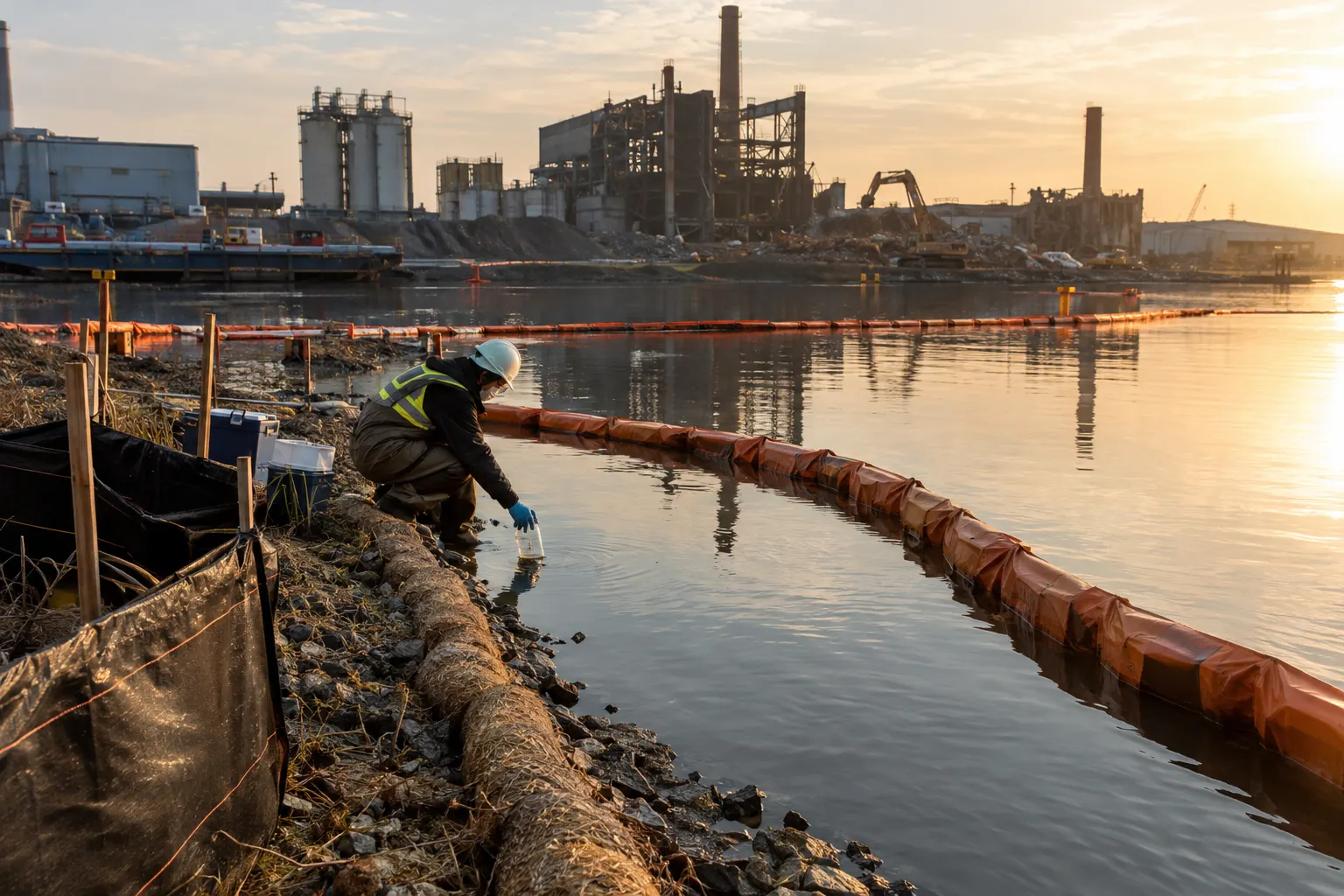
Our work often begins where environmental risk is highest: closed plants, legacy contamination and sites beside rivers and coastlines. We plan every project to prevent releases, protect surrounding communities and leave the site cleaner than we found it.
Our approach
Prevent first. Control always.
Environmental protection is built into the work plan, not added at the end. Before mobilization we assess the site’s environmental conditions, define the controls and confirm the permits and notifications required. During the work, crews follow those controls and supervisors verify them every shift.
01 · Environmental Stewardship
Our commitment
CCM Group is committed to meeting or exceeding the environmental requirements that apply to every project, and to continuous improvement in how we prevent, control and document environmental impacts.
- Comply with all applicable environmental laws, permits and owner requirements
- Prevent releases to soil, groundwater, surface water and air
- Respond quickly and effectively if a release occurs
- Engage openly with owners, regulators and neighboring communities
- Train every crew member on the environmental controls for their work
02 · Environmental Stewardship
Site environmental assessment
Each project starts with a review of the site’s environmental aspects across the full work scope, from abatement and decommissioning through demolition, processing and restoration.
Baseline conditions
Review of existing reports, surveys and known contamination.
Sensitive receptors
Waterways, wetlands, habitat and neighboring communities identified.
Hazardous materials
Asbestos, lead, PCBs, mercury and process residues located and characterized.
Controls & permits
Site-specific environmental controls, permits and notifications defined.
03 · Environmental Stewardship
Spill prevention & response
Equipment, fuels and process residues are managed to prevent releases, with response capability staged before work begins.
- Secondary containment for fuels, oils and stored liquids
- Pre-use equipment inspections for hydraulic and fuel leaks
- Process systems drained, cleaned and verified before dismantling
- Spill kits and containment boom staged at the work area
- Release reporting and response coordinated with the owner and agencies
04 · Environmental Stewardship
Air, water & land
Controls are matched to the site and the work, with particular care at waterfront, coastal and community-adjacent projects.
Dust & emissions
Water suppression, wind monitoring, engineered demolition methods and electric or low-emission equipment where feasible.
Storm water & waterways
Storm-water controls, silt fence, turbidity curtains and managed dewatering for marine and dredging work.
Soil & habitat
Defined work limits, erosion control and restoration to protect soil and surrounding habitat. Impacts are avoided first, then reduced, then restored.
05 · Environmental Stewardship
Waste handling & disposal
Every waste stream is characterized, handled and documented from the point of generation to its final permitted destination. Recycling and reuse are covered under Sustainability; this section covers what must be managed as waste.
- Waste characterization and profiling before removal
- Segregation of hazardous, universal and non-hazardous waste at the source
- Licensed transporters and permitted treatment, storage and disposal facilities
- Manifests, bills of lading and chain-of-custody records for every load
- Disposal certificates and close-out documentation for the owner
06 · Environmental Stewardship
Regulatory compliance
We manage the regulatory requirements of each project and maintain the records owners need for closure and due diligence.
- Asbestos (NESHAP) and demolition notifications
- Hazardous and non-hazardous waste profiles and manifests
- Storm-water and dust control plans
- Permits for marine, dredging and waterfront work coordinated with agencies
- Closure documentation and turnover packages
Responsibility